Von Neuman architecture. Main memory. Virtual memory.
Von Neumann architecture
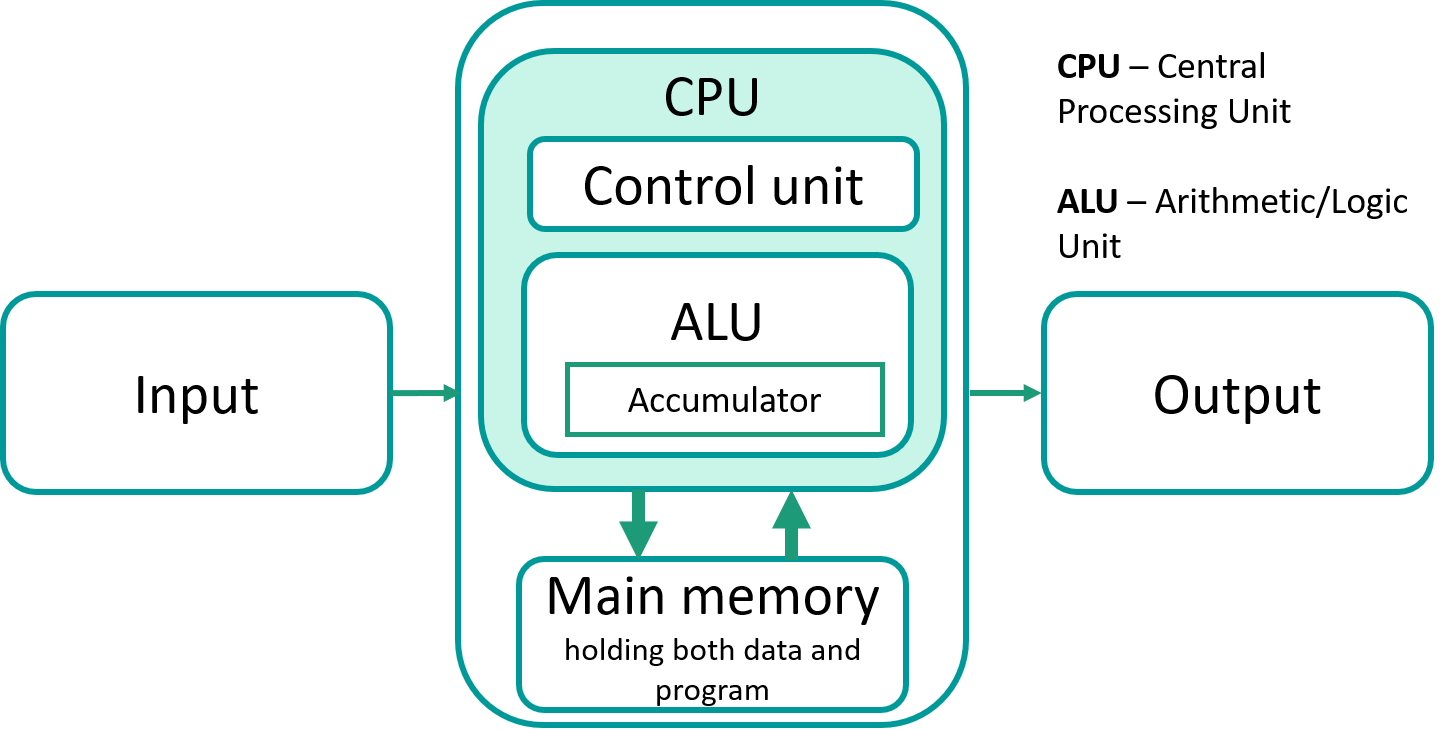
Control Unit is
the part of the processor that manages the execution of instructions.
ALU is the part of the processor that processes and manipulates data, carries out two types operation – arithmetic (+,-,*,/) and logic (AND, OR, NOT, etc).
Registers - the section of high speed memory within the CPU that stores data to be processed.
Bus - microscopic parallel wires that transmit data between internal components.
System bus –
the main highway connecting the CPU, the main memory and I/O
controllers;
It is made up of a data bus, an address bus and a
control bus.
Data bus - transfers data between the processor and memory.
Address bus - used to specify a physical address in memory so that the data bus can access it. 1directional
Control bus - controls the flow of data between the processor and other parts of the computer.
Main memory – stores data and instructions that will be used by the processor.
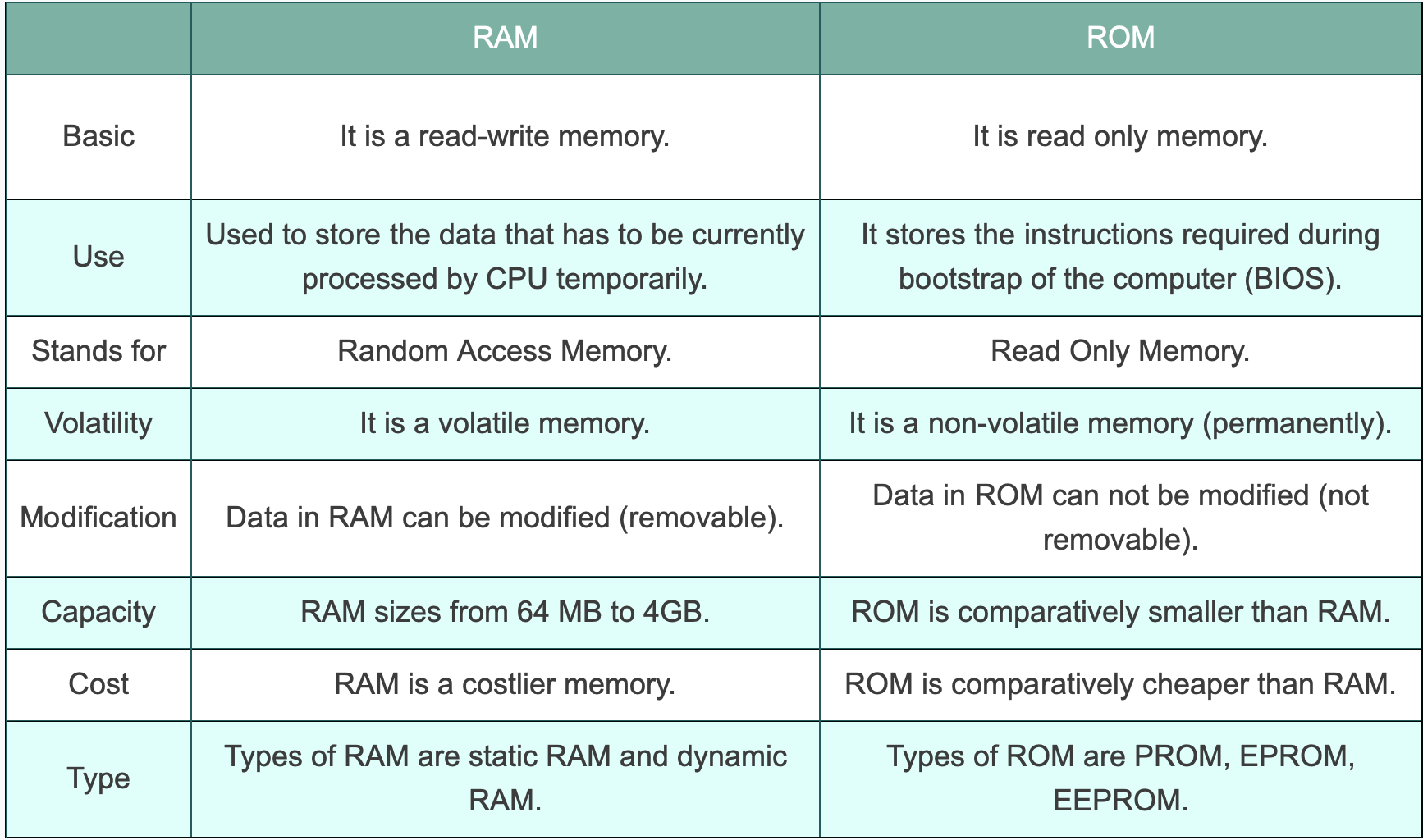
ROM (Read Only Memory) provides the computer with instructions that do not change - such as boot setup.
RAM (Random Access Memory) is the working space in which the computer stores data in current use.
Cache memory is a small amount of very fast memory which
is usually located on the CPU chip. The CPU can access cache memory
more quickly than normal RAM, but there is much less of it.
The system tries to keep the most frequently used data in the cache. It uses an algorithm to decide which data should go in the cache.
Virtual memory. When RAM gets too full, the computer's operating system can help out by temporarily marking sections of secondary storage for the CPU to use as a kind of extra memory. The operating system creates a 'pagefile' in this area which is used to hold data the CPU does not need immediately.
Paging (also called swapping) is where relatively inactive pages are temporarily removed from physical memory and placed into virtual memory.
Virtual memory is volatile.
The speed of accessing data located on the hard disk is thousands of times slower than RAM memory.
Advantages |
Disadvantages |
You can run more applications at once You can run larger applications with less real RAM You don't have buy more memory RAM |
Applications run slower It takes more time to switch between applications Less hard drive space for your use |