[eng] Физические угрозы. Методы обеспечения безопасности.
Data security is the practice of protecting digital information from unauthorized access, corruption
Cyber security: the use of technology, working practices and precautions designed to protect networks, computers, programs, and data from attack, damage or unauthorised access.
Core Principles of Cyber Security:
Privacy/Confidentiality – information that should be available only to authorized users.
Integrity means that information cannot be lost or changed from its original state.
Availability – information and systems must always be available to authorised users when needed.
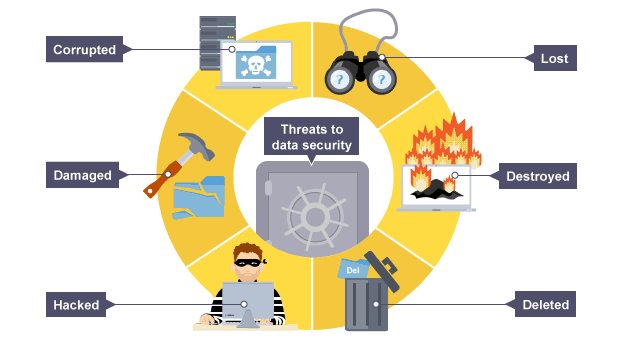
Consequences for Security Violations
- Risk to both the security and the integrity of personal or confidential information
- Identity theft
- Data corruption or destruction
- Unavailability of critical information in an emergency
- Loss of valuable business information
 P
P
Physical security includes the following aspects:
- fire protection;
- protection against water and fire extinguishing liquid
- protection against theft or vandalism;
- dust protection;
- protection against unauthorized access to the premises.
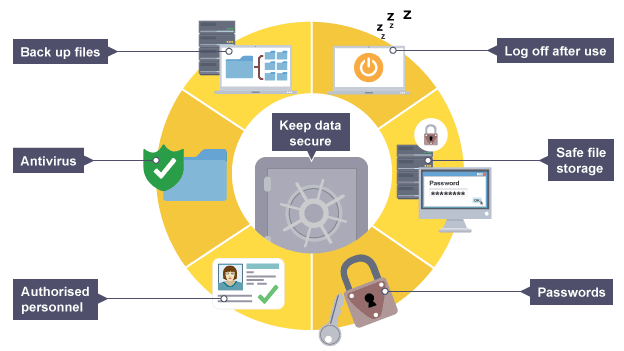
Example protection against theft or vandalism:
- Lock the room when not in use
- Use cards or keyboards to activate locks
- Screw computers to the table
- Keep windows closed, especially if you are on the ground floor.
- CCTV video cameras
- In large firms, security guards
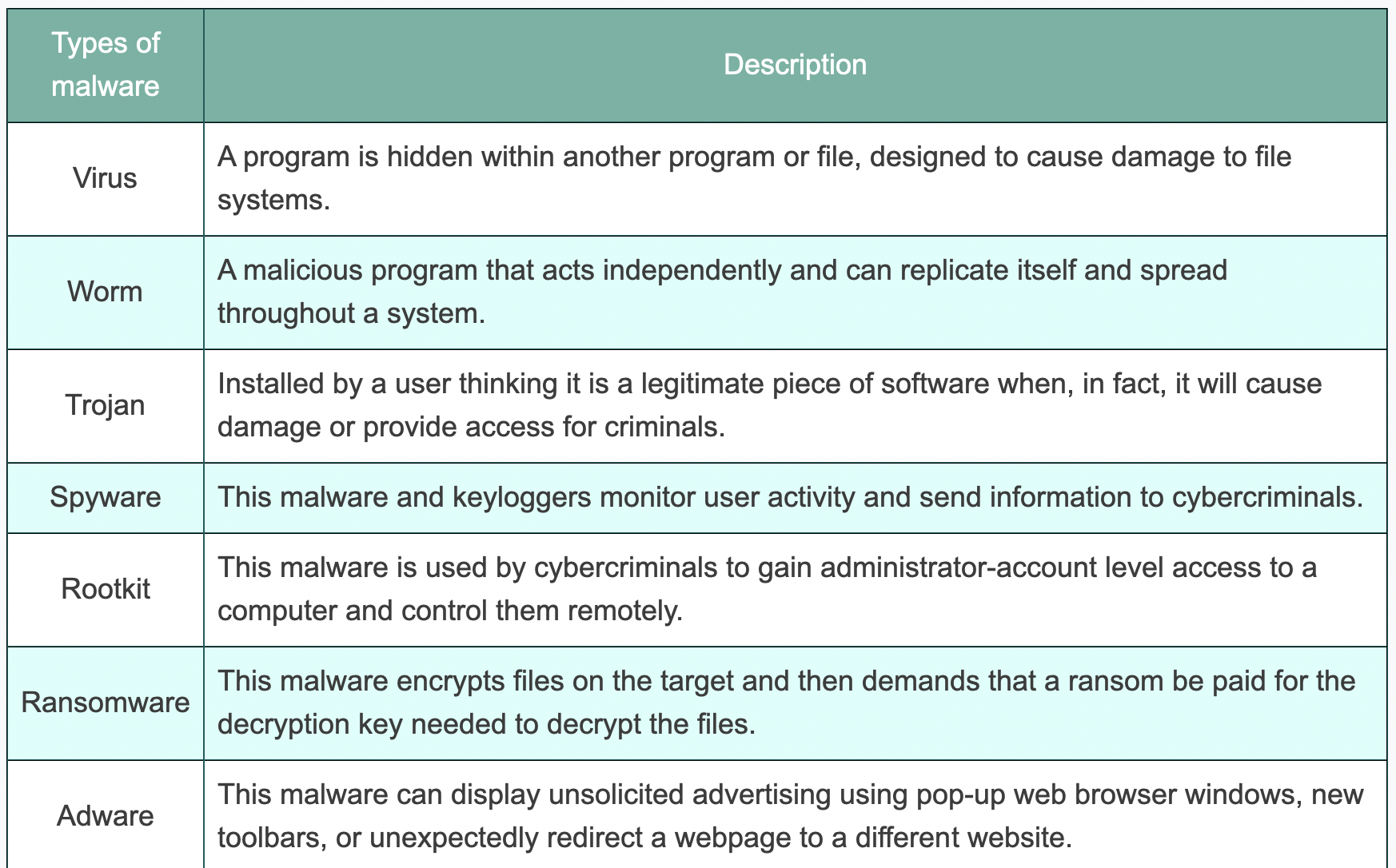
Malicious software (malware), is programs created by cybercriminals to commit illegal activities.
Some of the ways computer users can protect themselves against
security breaches:
- Use strong passwords that can’t be easily predicted, and keep them secret.
- Ensure that your computer, devices and applications are updated with the latest version of the operating system in question.
- Ensure that your computer is secured with up-to-date antivirus and anti-spyware software.
- Ignore unknown links and attachments. Don’t download unfamiliar files or programs onto your computer or other devices.
- Remember that data, especially passwords transmitted through typical wireless connections, is very easy for hackers to capture.
- Look for ‘https’ in the URL before you input any confidential information or a password. The added s in https means secure, and guarantees a degree of protection not afforded by the standard http markup.
- Avoid using normal, unencrypted e-mail and unencrypted Instant Messaging if you’re concerned about confidentiality.
Firewalls are hardware or software security systems designed to prevent unauthorized access to or from your computer or private network. Firewalls are located between the user's computer and the external network and filter incoming and outgoing traffic according to the established rules.

Functions of firewalls:
-
Packet filtering
-
Stop hackers from accessing your computer.
-
Protect your personal information.
-
Blocks “pop up” ads and certain cookies.
-
Determines which programs can access the internet.
Cracking is the process of obtaining a password by force (by skipping authentication and registration steps).
.jpg)
- Brute force attack is a trial-and-error method of obtaining login names and passwords to allow the hacker to access the network. For example, automated software can be used to generate and try millions of login names and passwords.
- Dictionary attack is a method of breaking into a password-protected resource by systematically entering each word in the dictionary as a password.
A hacked computer can be used to do the following:
- Record keystrokes and steal passwords
- Send spam and phishing emails
- Harvest and sell email addresses and passwords
- Gain access to personal information
- Infect other systems with viruses and other malware
- Conceal programs that launch attacks on other computers
- Illegally disseminate music, movies and software
- Distribute child pornography
- Produce great volumes of traffic, slowing down the whole system
How to prevent password cracking?
- Choose a very long password;
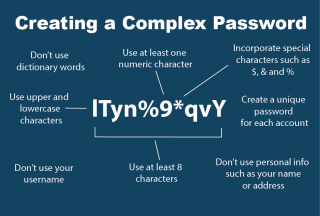
- Сreate complex passwords (uses upper and lower case, digits, symbols).
- Choose a password that is not in a dictionary;
- Add numeric / punctuation / etc;
- Is made up of other words;
- Uses other character sets;
- Uses upper and lower case;
- Do not use names, dates, the same word twice or words with numbers appended.